What this job involves and what it costs
We install mains-powered, interlinked smoke and heat alarms with sealed backup batteries — straightforward installs are quoted in writing, parts, labour and VAT included. Serving Bexleyheath and surrounding areas including Barnehurst, Colyers and Upton. All work is certified where electrical work is required and comes with a workmanship guarantee; we test interlinking, advise on placement, testing routines and replacement schedules.
When you need it
- You’re rewiring or having new wiring fitted and the current smoke alarms are being taken down.
-
This usually means alarms need replacing or reconnecting to the new mains wiring so they remain compliant and reliable.
-
After converting the loft or adding an extension, alarms you used to hear don’t seem to go off upstairs (or a new room doesn’t have one).
-
This usually means alarm positions and interlinking need updating to match the changed layout and escape routes.
-
You’re renting out the property and worried the alarms won’t pass inspection or tenants complain they don’t work.
-
This usually means the landlord must fit the required smoke and CO alarms and keep them maintained.
-
An alarm keeps going off for no obvious reason — especially when you cook.
-
This usually means the wrong type of alarm is in the kitchen area and a heat alarm (not a smoke alarm) might be needed to prevent nuisance activations.
-
Alarms are beeping occasionally, missing a test button, or won’t stop chirping.
-
This usually means the unit is faulty, has a low battery/back-up issue, or the test function isn’t working and needs repair or replacement.
-
Some alarms are old and manufacturers’ replacement dates have passed.
-
This usually means those units are past their useful life and should be replaced for reliable protection.
-
When one alarm goes off, other alarms don’t sound in different rooms.
- This usually means the alarms aren’t properly interlinked, so a single fire warning isn’t being heard throughout the home.
What it costs in Bexleyheath
Below are our fixed prices for mains-interlinked smoke and heat alarm work in Bexleyheath, provided in writing before any work starts. Prices include VAT, parts, labour, testing and certification as stated.
| Job | Price | What's included |
|---|---|---|
| Mains alarm | £90–£140 each | Fitting, test, certificate |
| Fault finding | £80/hr | Labour; most faults take 1–2 hours |
| Consumer unit | £500–£700 | Replacement, testing, certificate |
| Partial rewire | £1,200–£3,000 | Labour, materials, certification |
Plaster repairs, decoration, asbestos removal and specialist access equipment are not included.
What is involved on the day
On the day, we survey the property, confirm suitable alarm positions and safely isolate relevant circuits before work begins. We install the specified smoke and heat alarms in line with current fire-safety guidance, then test operation, interlinking and mains supply where applicable. We’ll explain the controls and provide the relevant electrical certificate for your records.
Survey and isolation
Before fitting smoke or heat alarms, we’ll survey the property, confirm the required alarm locations and check the existing electrical installation where mains-powered units are planned. We’ll assess ceiling construction, escape routes, ventilation, kitchens and areas prone to steam, ensuring the proposed arrangement supports BS 5839-6 guidance and avoids nuisance activations.
Our risk assessment identifies access requirements, vulnerable occupants, asbestos concerns and any defects affecting safe electrical work. For rented homes, we’ll arrange appropriate tenant notification and confirm access with the landlord or managing agent.
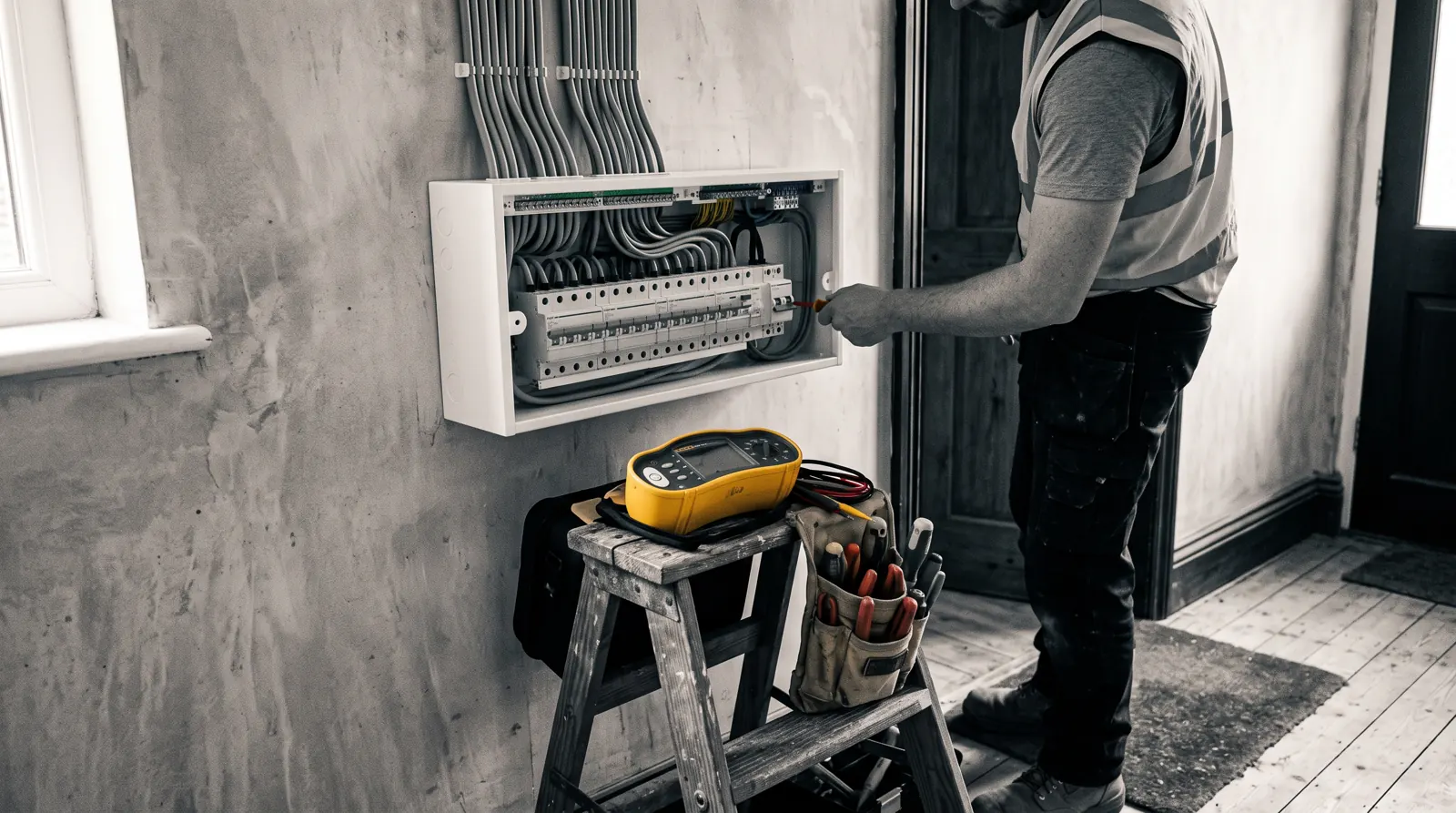
Before electrical work begins, we’ll identify the relevant circuit at the consumer unit, isolate it safely, secure it against reconnection and prove dead using appropriate test equipment. We’ll also check earthing, protective devices and cable condition, particularly in older Bexleyheath properties where legacy wiring may require further investigation before proceeding.
Installation
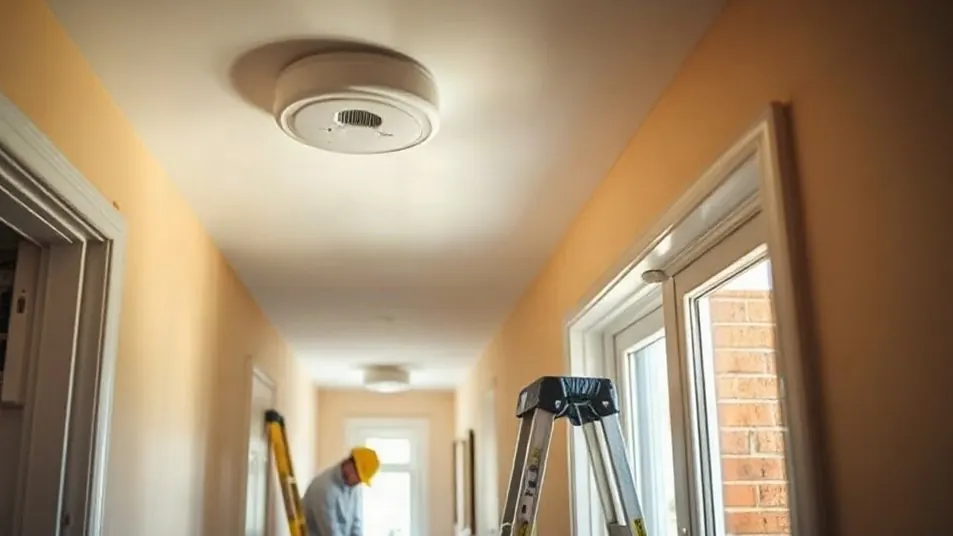
With the circuit safely isolated, we’ll install the specified smoke and heat alarms in the surveyed positions, using suitable fixings for the ceiling construction and maintaining the required spacing from walls, light fittings, vents and cooking appliances. We’ll route and terminate mains cabling neatly, provide the required permanent supply, and fit the correct alarm bases and heads in accordance with manufacturer instructions and BS 5839-6 principles. Where wireless connectivity forms part of the interlink arrangement, we’ll position units to support reliable communication without compromising the fire-detection layout. We’ll make certain each alarm has its backup battery fitted correctly and explain the expected battery lifespan and replacement requirements. In older Bexleyheath properties, we’ll take particular care around concealed VIR, rubber or aluminium wiring, adapting installation methods where necessary to avoid disturbing unsafe cable or fragile finishes.
Testing
Once the alarms are fitted, we’ll test every unit individually and confirm that all interconnected alarms sound together, whether the system is hard-wired, wireless-linked or a combination of both. We’ll verify correct siting operation, mains supply indication, backup battery status and any radio-link pairing. Where applicable, we’ll carry out alarm sensitivity testing using approved methods, rather than relying only on the test button.
We’ll check that smoke and heat alarms respond in the intended sequence, that sound levels are audible throughout the property, and that fault indicators are clear. We’ll also explain routine user testing, cleaning and battery replacement requirements, including the limitations of sealed long-life batteries. Any issue with circuit continuity, interlink communication or alarm response is addressed before we leave, helping guarantee the installation operates reliably and supports the relevant fire-safety duties.
Certificate
Following installation and functional testing, we’ll issue the appropriate electrical certification for the alarm supply work, such as a Minor Electrical Installation Works Certificate where a circuit has been extended or altered. This records the circuit details, protective device, test results, polarity, continuity and insulation resistance checks relevant to the work completed.
We’ll also provide alarm documentation covering the alarm locations, mains supply arrangement, interlink method, battery back-up and recommended routine testing. Your compliance certificate confirms that the electrical alterations have been inspected and tested in accordance with BS 7671 where applicable. For landlord properties, keep these records with your wider safety file and provide relevant information to tenants. Before we leave, we’ll show you the test function, hush control and replacement-date marking, so you know how to maintain the system safely.
Options and what we recommend
For most Bexleyheath homes, we recommend interlinked smoke alarms on each storey and a heat alarm in the kitchen, selected and positioned to BS 5839-6 so cooking fumes don’t create nuisance activations. We’ll assess layout, escape routes and any open-plan areas before specifying mains-powered units with sealed backup batteries.
| Option | Our recommendation |
|---|---|
| Hard-wired interlinking | Best during rewires or where cables can be installed neatly |
| Wireless interlinking | Ideal for finished homes, period properties and minimal disruption |
Wireless systems still need reliable power supplies and correct siting; radio range is checked during commissioning. We favour optical smoke sensing for bedrooms, halls and landings, while heat detection suits kitchens and garages. Battery lifespan varies by model, so we’ll explain replacement requirements and test functions before handover. Avoid standalone alarms where an interlinked system is practicable.
Rules and certificates
The certification required depends on how the alarm system is powered and connected. If an alarm is connected to an existing circuit, installers commonly issue a Minor Electrical Installation Works Certificate; a new circuit, consumer unit replacement, or electrical work in a bathroom may be notifiable under Part P of the Building Regulations and could require a full Electrical Installation Certificate and Building Control notification.
NICEIC-approved, Part P-registered electricians can self-certify qualifying work and notify Building Control on your behalf, which means they can provide the appropriate certification where that route applies; if work is notifiable and carried out by a non-registered installer, the homeowner will normally be responsible for arranging and paying for any required Building Control inspection.
For rented properties, landlords have legal duties to ensure electrical installations are maintained in a safe condition; while some guidance recommends an Electrical Installation Condition Report (EICR) every five years, the precise frequency depends on the tenancy and applicable regulations, so landlords should check current legal requirements.
Keep alarm certificates, test records and compliance documentation in a safe place; they can help demonstrate that installations have been tested and maintained, assist with future maintenance, and provide evidence if questions about safety or compliance arise.
Older homes around Bexleyheath
In central Bexleyheath, around the riverside streets and medieval core, and in nearby Upton village south of the town centre, we carry out more careful alarm surveys because many properties date from the mid- to late‑Victorian period (circa 1860–1900) and commonly retain original VIR or rubber‑insulated wiring that can be ageing and brittle.
Where period wiring is retained in Bexleyheath’s Victorian terraces or Upton’s older mill cottages, we will not connect new equipment to visibly damaged insulation, overloaded lighting circuits in the typical two‑lamp Victorian circuits, or to joints concealed in inaccessible ceiling voids common in lath‑and‑plaster properties.
How long it takes and whether you lose power
Once we’ve confirmed suitable detector positions and a safe cable route, a typical mains-powered, interlinked smoke and heat alarm installation in a Bexleyheath home is usually completed within a few hours; larger properties or listed buildings may take longer where routes need to minimise disturbance. Installation duration depends on access to ceilings, existing wiring condition, and whether a new circuit or protected supply arrangement is required.
We isolate only the relevant circuits wherever practical, test for dead conditions, and maintain safe working procedures throughout. A brief power interruption may be necessary when connecting at the consumer unit or testing interlink operation, but we’ll advise you beforehand. We commission every alarm, confirm mains supply and battery back-up, test audible warning operation, and label any relevant circuit before restoring power safely.